


Your cart is currently empty!
You may check out all the available trips and book one that suits you.
Continue Browsing Trips

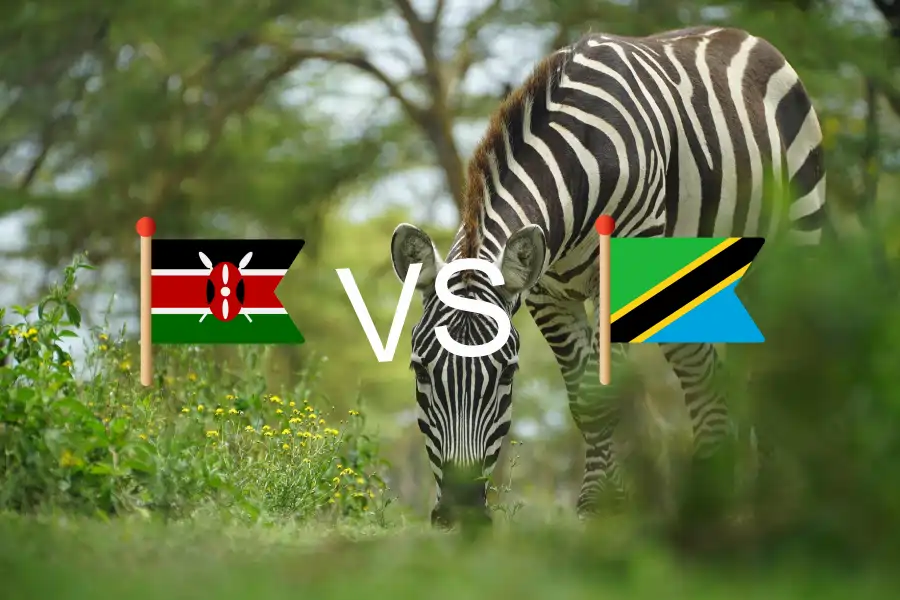
This is the question we get more than almost any other. Kenya or Tanzania? Maasai Mara or Serengeti? Which one is better?
The honest answer is that neither is universally better. They share the same ecosystem, the same wildlife, and in some areas the same landscape. The differences are real but they’re more about logistics, budget, and what kind of experience you’re after than they are about one country having better animals than the other.
Here’s how to think about it.
Choose Kenya if: It’s your first safari, you’re coming from Nairobi, you want good wildlife in fewer days, or you’re combining a safari with a beach holiday on the Kenyan coast.
Choose Tanzania if: You want more remote wilderness, you’re planning a longer trip, you want to combine multiple parks in one circuit, or you’ve already done Kenya and want something different.
Both are worth doing. If you have the time and budget, do both.
Kenya and Tanzania share the same ecosystem. The Maasai Mara in Kenya and the Serengeti in Tanzania are the same continuous landscape split by a border. The same animals cross between them. The Great Migration doesn’t care about national boundaries — it follows rainfall and grass, which means the wildebeest herds spend part of the year in Tanzania and part in Kenya.
What Kenya does well:
The Maasai Mara has one of the highest concentrations of big cats in Africa. Lions, leopards, and cheetahs are frequently spotted. The Mara River crossings — where wildebeest plunge into crocodile-filled water during the migration — happen within the Kenyan side of the ecosystem between July and October. If watching a river crossing is the main thing on your list, Kenya during migration season is where you want to be.
Amboseli National Park gives you elephants in front of Mount Kilimanjaro. It’s a specific, dramatic landscape you won’t find anywhere else.
Lake Nakuru has rhinos, flamingos, and a compact landscape that works well for a day trip.
What Tanzania does well:
The Serengeti is larger than the Mara — much larger. Over 14,000 square kilometres compared to the Mara’s 1,500. That size means more varied terrain, more remote areas, and more opportunity to feel genuinely alone in the wilderness.
Ngorongoro Crater is unlike anything else in East Africa. It’s a collapsed volcano whose walls form a natural enclosure for around 25,000 animals — including one of the highest densities of lions on earth and a healthy black rhino population. You drive down into the crater and spend a day watching wildlife in a bowl of land that feels prehistoric. It’s extraordinary.
The Serengeti also hosts the calving season between January and March — hundreds of thousands of wildebeest calves born on the plains in a matter of weeks. It’s less dramatic visually than the river crossings but ecologically it’s remarkable and far fewer tourists prioritise it.
This is where the differences become practical.
Getting There
Kenya is easier to access from Nairobi. If you’re based in Kenya, a Maasai Mara safari is a five to six hour drive or a short flight from Wilson Airport. You can be in the park the same day you decide to go.
Tanzania requires more planning. Flying into Kilimanjaro Airport or Julius Nyerere International Airport in Dar es Salaam, then connecting to your park. Most Tanzania safari circuits involve flying between parks because the distances by road are significant. The logistics are manageable but they add time and cost.
Roads and Travel Between Parks
In Kenya, Maasai Mara is the centrepiece and most itineraries are built around it. Adding a second park like Amboseli or Lake Nakuru is straightforward.
In Tanzania, the classic circuit — Serengeti, Ngorongoro, Tarangire — works well as a multi-park trip but requires more days to do properly. Rushing it defeats the purpose.
Border Crossings
Some operators run cross-border itineraries that start in Kenya and end in Tanzania or vice versa. These work well if you have five to eight days and want the best of both. You’ll need visas for both countries. Tanzania visa for Kenyan citizens is currently available on arrival for citizens of most East African Community countries — confirm this before you travel as policies can change.
Tanzania tends to be more expensive than Kenya for several reasons.
Park fees in Tanzania are among the highest in Africa. Ngorongoro Conservation Area charges a significant conservation fee on top of standard entry. The Serengeti fees are higher than Maasai Mara fees. If you’re price-sensitive, Kenya gives you more safari for the same budget.
Internal flights in Tanzania (between parks) add up. Many Tanzania itineraries require at least one bush flight, which is a real but significant expense. Kenya’s parks are more accessible by road, which keeps costs down.
Accommodation pricing is broadly similar between the two countries at comparable quality levels. Kenya has more mid-range lodge options in the Mara, which gives you more flexibility if you’re not on a luxury budget.
Here’s where it gets subjective.
Kenya’s Maasai Mara is one of the most famous wildlife destinations on earth. That means it’s good — the infrastructure is there, the guides are experienced, the lodges are well-run. It also means it can feel busy, particularly during peak migration season when multiple vehicles gather at a crossing point.
Tanzania’s Serengeti, particularly the central and northern sections, can feel more remote. You can drive for an hour without seeing another vehicle in the right season. If solitude and the feeling of genuine wilderness matter to you, Tanzania delivers more of it.
The Ngorongoro Crater is busy. It’s a finite space and operators converge on the same areas. Go early, before the midday rush.
Both countries have excellent guides. Kenya’s guides are often more comfortable with English-speaking tourists given the volume of international visitors. Tanzania’s guides are equally knowledgeable — language isn’t a barrier, it’s just an observation.
This question deserves its own answer because it’s so commonly asked.
The Great Migration is a year-round cycle, not a single event. The wildebeest and zebras are always moving somewhere. Which part of the cycle you see depends on when you travel.
January to March: Calving season in the southern Serengeti, Tanzania. Hundreds of thousands of calves born on the plains. Predator activity is intense.
April to June: Herds moving north through the western Serengeti. Transition period. Fewer tourists.
July to October: Herds in the northern Serengeti and crossing into the Maasai Mara, Kenya. This is when the famous river crossings happen. Peak season on both sides of the border.
November to December: Herds moving south back into Tanzania.
If the river crossings are your goal, Kenya between July and October is the answer. If calving season or the broader Serengeti experience appeals more, Tanzania between January and March is where to be.
Yes, and it’s worth it if you have the time.
A well-designed eight to ten day itinerary can cover Maasai Mara in Kenya and Serengeti plus Ngorongoro in Tanzania without feeling rushed. You fly between them. You get the best of both ecosystems. It costs more than a single-country trip but the variety is significant.
This is the option we recommend most often to travellers who have the flexibility and want a complete East African safari experience rather than a single-destination trip.
| Kenya | Tanzania | |
|---|---|---|
| Best for | First-timers, shorter trips, budget-conscious | Longer trips, wilderness feel, multiple parks |
| Flagship park | Maasai Mara | Serengeti + Ngorongoro |
| Migration crossings | July–October (Mara River) | Jan–March (calving), June (western corridor) |
| Cost | More affordable overall | Higher park fees, internal flights |
| Accessibility | Easy from Nairobi | Requires more planning |
| Crowd levels | Busy in peak season | Varies — some areas very remote |
| Unique draw | Big cats, Mara crossings, Amboseli elephants | Ngorongoro Crater, vast Serengeti, calving season |
If you’re based in Kenya and it’s your first safari, start with Kenya. The Maasai Mara will show you what the fuss is about without complicated logistics. You can always add Tanzania later.
If you’ve already done Kenya, Tanzania adds a different dimension — more space, more parks, and the Ngorongoro experience which is genuinely unlike anything in Kenya.
If you can do both, do both.
Either way, talk to us before you book. We run safaris in both countries and we’ll give you an honest recommendation based on your dates, budget, and what you actually want to see — not based on which one pays us a higher commission.
Planning a Kenya or Tanzania safari? Contact Move Expeditions and let’s figure out which option fits your trip best.